
Best pantry organisers Australia: choose what fits.
For short jars with spare space above them, start by comparing an expandable shelf riser. For bottles, consider a turntable. Deep shelves usually call for a pull-forward bin, while dry ingredients need containers sized for both the food and the cupboard.
Research-based selections from published manufacturer specifications. No hands-on testing or product ratings are claimed. Australian availability, delivery and the exact model should be checked before buying.
Buy for one problem first.
The best pantry organisers in Australia are the ones that fit your usable shelf space and let you reach the food without unpacking half the cupboard. A larger set is poor value if several pieces do not fit. Start with one organiser, use it with your normal groceries, then decide whether to add more.
Pantry organiser comparison
All measurements below are in centimetres. They describe the outside product envelope, not the space inside a bin or beneath a riser. Inch measurements have been converted at 2.54 cm per inch.
| Organiser | Best matched to | External size (cm) | Care / check |
|---|---|---|---|
| Joseph Joseph CupboardStore expandable shelf | For spare height above short items | 25.5–40.5 W × 21.5 D × 16.3 H | Wipe clean |
| OXO Good Grips 11-inch turntable | For bottles you reach for often | 27.94 diameter × 3.81 H | Confirm care for the exact listing |
| Sistema Ultra 1.9 L Square container | For dry ingredients in a narrow footprint | 10.2 W × 11.4 D × 27.2 H | Top-rack dishwasher; no microwave or freezer |
| Joseph Joseph CupboardStore under-shelf drawer | For small packets below a shelf | 23.5 W × 22.5 D × 10 H | Wipe clean |
| YouCopia RollOut pantry drawer, 8-inch | For bringing deep-shelf contents forward | 20.57 W × 38.1 D × 14.22 H | Hand-wash only |
W = width, D = depth, H = height. Dimensions alone do not confirm load capacity, mounting compatibility or clearance for moving parts.
Five organisers for different jobs

Joseph Joseph CupboardStore expandable shelf
This is our first option to compare when short jars or tins leave usable space above them. Joseph Joseph lists an adjustable width from 25.5 to 40.5 cm, so you can choose how much of the shelf it occupies.
The adjustable span gives you more layout flexibility than a fixed-width riser.
Its 16.3 cm overall height is not the clear opening beneath it. Allow for the items on top and room to lift them. Check the load guidance for your exact model.
The maker specifies damp-cloth cleaning. Do not treat it as a dishwasher-safe rack.
Read the retailer’s product details →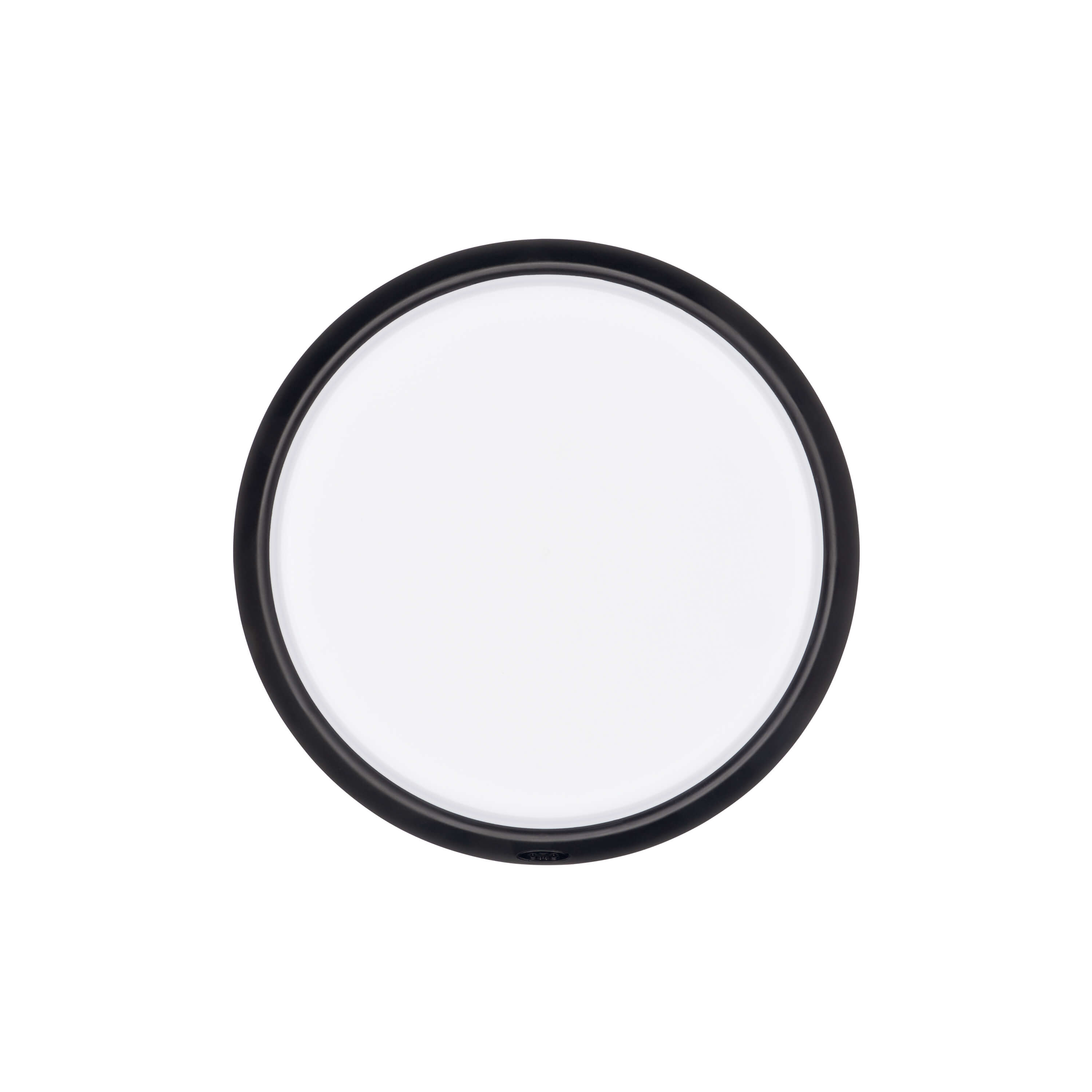
OXO Good Grips 11-inch turntable
For oils and sauces, this is the turntable to compare with a rectangular tray. OXO lists an 11-inch diameter, non-slip feet and a raised rim. The footprint is approximately 27.94 cm across.
Rotating the tray can bring a bottle to the front without moving each bottle separately.
A circular tray leaves the corners of a rectangular shelf unused. Allow for bottle height and check that the loaded tray clears the door and neighbouring items.
The linked specification is from OXO’s US site. Confirm the model, Australian delivery and care instructions with your seller.
Read the manufacturer’s specifications →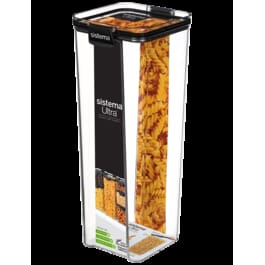
Sistema Ultra 1.9 L Square container
This tall container is worth comparing when shelf width is limited but there is enough height. Sistema’s Australian specification lists a 1.9 L capacity and model 51404, with locking clips and an airtight seal.
The clear body lets you see the contents. Its small base may suit a narrow run of ingredients.
At 27.2 cm tall, it will not suit every shelf. Capacity in litres does not tell you the weight of flour, pasta or cereal that will fit.
Sistema allows top-rack dishwasher cleaning, advises upright storage and does not recommend microwave or freezer use.
Read the manufacturer’s specifications →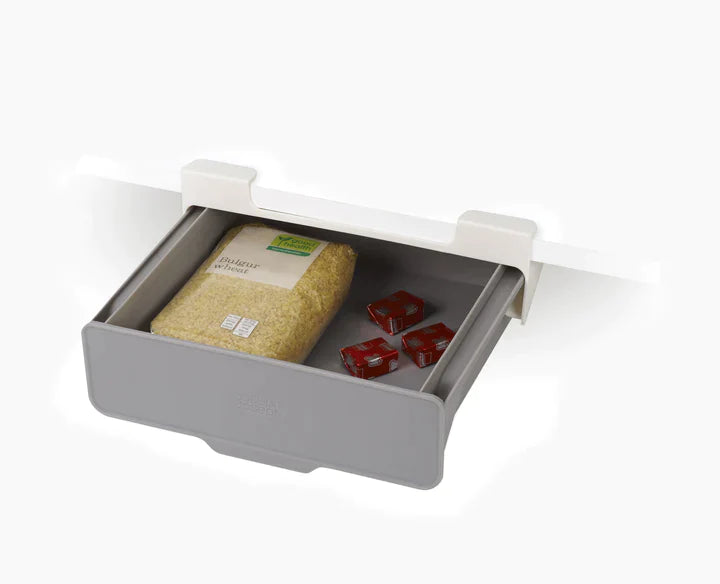
Joseph Joseph CupboardStore under-shelf drawer
This drawer uses space below a shelf for small packets and stock cubes. It is an option when the shelf below is not already filled by tall containers.
Small items get a defined compartment without a loose basket on the shelf surface.
Joseph Joseph specifies a maximum shelf thickness of 2 cm and a kitchen unit wider than 23.5 cm. Installation uses hooks and adhesive tape, so check the surface and rental requirements.
The instructions require a clean, dry underside and a 24-hour wait after fitting. Check drawer travel as well as the closed dimensions.
Read the manufacturer’s specifications →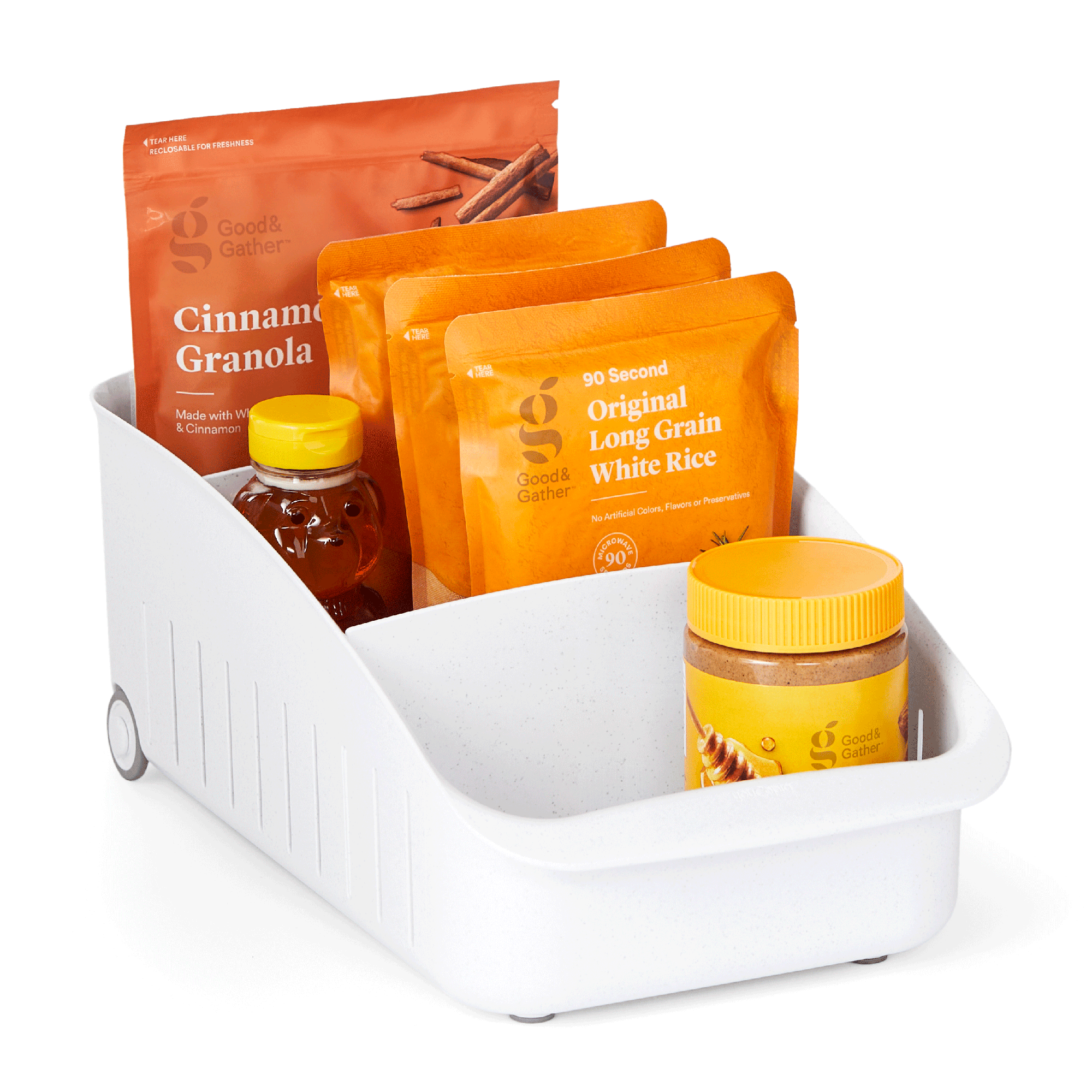
YouCopia RollOut pantry drawer, 8-inch
For a deep shelf, compare this rolling organiser with a simple handled bin. YouCopia specifies two adjustable dividers, wheels and carrying handles.
The dividers let you group packets while bringing the contents forward together.
The 38.1 cm depth rules it out for many shallow cupboards. Check that the front can move past the cupboard opening and that you can support it when pulling it forward.
The maker specifies hand-washing. This source is international; Australian stock, shipping and returns need confirmation before purchase.
Read the manufacturer’s specifications →Does the organiser fit your shelf?
Select an organiser and enter the clear space available. The checker compares a fixed orientation with the published outside dimensions. Add the extra height needed for bottles or jars that sit on top, plus any handling space you want.
Measure the narrowest opening, not just the shelf behind it. Hinges, door lips and neighbouring items can reduce the room you actually have.
This is a dimensional screen, not a guarantee of fit. It does not check weight limits, adhesive suitability, drawer travel or the opening below a riser. The expandable shelf is checked at its minimum width. The under-shelf drawer needs a unit wider than its stated width and a shelf no thicker than 2 cm.
Enter zero extra height only to compare the bare organiser. Zero spare clearance is not a practical fit.
A deep shelf needs a way to reach the back.
Depth gives you room to store more, but the back row is often the least convenient place to use. A pull-forward bin keeps a group together. A turntable changes which side faces you. A riser raises the rear row, although it does not bring that row any closer.
Qualitative layout diagram. It illustrates movement, not measured performance or a storage-capacity score.
Try the motion before filling the shelf. A bin needs a clear route out. A turntable needs space to rotate when loaded. A riser needs headroom above the tallest item. If you have to move something else every time, change the layout before buying more organisers.
Measure the opening
Write down clear width, depth and height. Include hinges and door fittings. For sliding products, measure the path out of the cupboard as well.
Use a cardboard footprint
Cut out the product’s outside width and depth. Set it on the shelf and close the door. This gives you a quick check of the space left beside it.
Plan for your hand
Leave room to grip a handle, lift a jar and remove a lid. A product that squeezes into the gap may still be awkward to use every day.
What to check before you buy pantry organisers
Compare the exact size and variant
Retail listings can group several sizes or colours on one page. Match the selected size, model name and dimensions with your notes before ordering. A photo showing a roomy shelf does not establish the size of the item in your basket.
For imports, confirm who dispatches the item, whether it can be delivered to your postcode and how returns work. Compare the delivered price in Australian dollars. A cheaper organiser can become an expensive trial if return postage is difficult.
Check the usable space inside
The dimensions of a bin usually describe its outside envelope. Sloping sides, dividers and handles reduce the space available for packets. If a particular cereal box must fit, ask for the internal dimensions rather than assuming the advertised width is enough.
Separate storage from food contact
A basket for sealed packets has a different job from a container holding loose rice. For direct food contact, NSW Food Authority advises choosing packaging made for that purpose and checking suitability for the food, temperature and cleaning method. See the food packaging guidance.
Read the cleaning instructions
Do not assume that a clear plastic organiser is dishwasher-safe. Check the base, lid, dividers and seal separately. Washing by hand may be fine for a basket, but awkward for a narrow container that is difficult to reach inside.
Check reusable food containers for cracks, chips and damaged seals. The same Food Authority guidance explains why damaged packaging should be discarded.
How to organise a pantry on a small budget
Start by grouping packaged items in a tray or basket you already have. Use it for a week and notice what gets in the way. You might need a shallower bin, a better handle or no extra storage at all.
Buy individual pieces when possible. A large matching set makes sense only when the sizes match your food and your shelves. Count the pieces you will actually use when comparing value. Extra tiny containers do not help if you mostly buy large packets.
Keep original packets where practical
Group unopened packets by use. Decant only where a suitable container makes storage or access easier. Keep the ingredient, allergen and storage information when transferring food.
Reuse a layout before replacing it
If an existing basket works, keep it. Spend on the part that fails: the hidden back row, the pile of sachets or the shelf where bottles block one another.
Leave space for refills
Plan where the rest of a packet goes when a container is not empty. A small refill area can be easier to manage than topping up every container immediately.
Check date marks and follow the original food storage directions, including instructions after opening. NSW Food Authority recommends rotating stock so older items are used first. Read its advice on keeping food safe.
For more starting points, visit the Shelf & Pantry home guide. It covers storage types and includes a calculator for containers placed side by side.
Pantry organiser FAQs
What are the best pantry organisers for deep shelves?
A handled or rolling bin is often the first type to compare because it brings several items forward together. Check depth, the opening it must pass through and the space needed to pull it out. A tall back row may also need a different arrangement so labels remain visible.
Are lazy Susans worth using in a pantry?
They can be useful for upright bottles that are hard to reach. Check the loaded turning circle and shelf height. A rectangular bin may use the footprint more efficiently, while a turntable may make access easier. Choose based on the contents and cupboard.
Should I buy a large pantry container set?
Only if its sizes match the ingredients and shelf space you have. Make a list of the packets you buy, then work out which containers you would use. Trying one container first can reveal whether the lid and opening suit you.
Can I install an under-shelf drawer in a rental?
Check your rental requirements and the fixing method first. Tool-free does not mean adhesive-free or damage-free. Follow the product instructions and confirm that the shelf material and thickness are suitable.
How much clearance should I leave around an organiser?
There is no single clearance that works for every product. Leave enough room for its moving parts, your hand and anything stored on top. Use the fit checker as an initial screen, then test the movement with a template and follow the maker’s instructions.
Have these pantry organisers been tested by Shelf & Pantry?
No. This guide compares published manufacturer specifications and uses them to explain suitable storage situations. It does not report hands-on durability, seal or load testing. Recommendations should be checked against your measurements and the exact product listing.
Sources and specifications
Product dimensions and stated care requirements were researched from manufacturer specifications; the expandable shelf also has a retailer reference below. Suitability comments are editorial judgments based on those specifications.
- Joseph Joseph CupboardStore expandable shelf: David Jones product reference
- OXO Good Grips 11-inch turntable: manufacturer specification
- Sistema Ultra 1.9 L Square container: manufacturer specification
- Joseph Joseph CupboardStore under-shelf drawer: manufacturer specification
- YouCopia RollOut pantry drawer, 8-inch: manufacturer specification
- NSW Food Authority: food packaging
- NSW Food Authority: keeping food safe